Redevelopment of the Goods Yard Site
 i
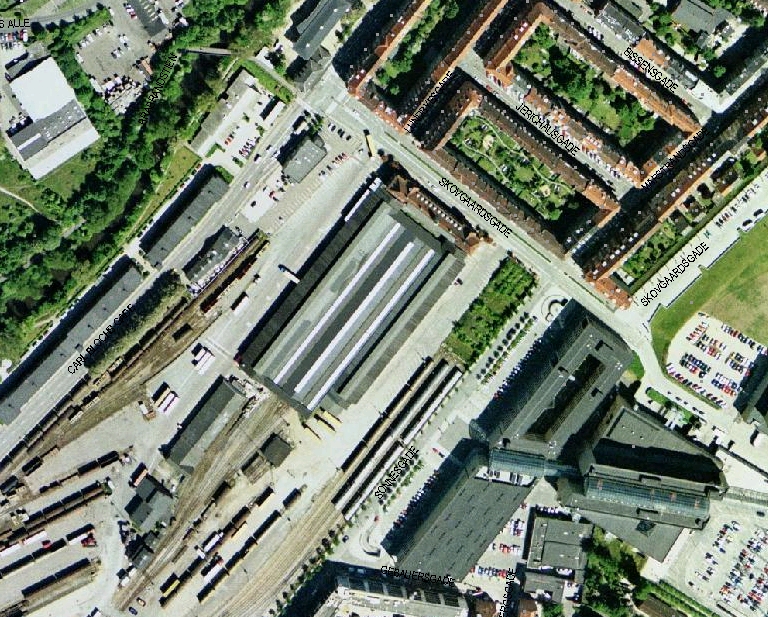
iI attended a party in the empty freight yard halls back in 2000, and since then not much has happened in the area.
Plans have fluctuated between larger and smaller cultural institutions, and in May 2007 the idea of a multi-purpose hall on the site was given a new lease of life.
 i
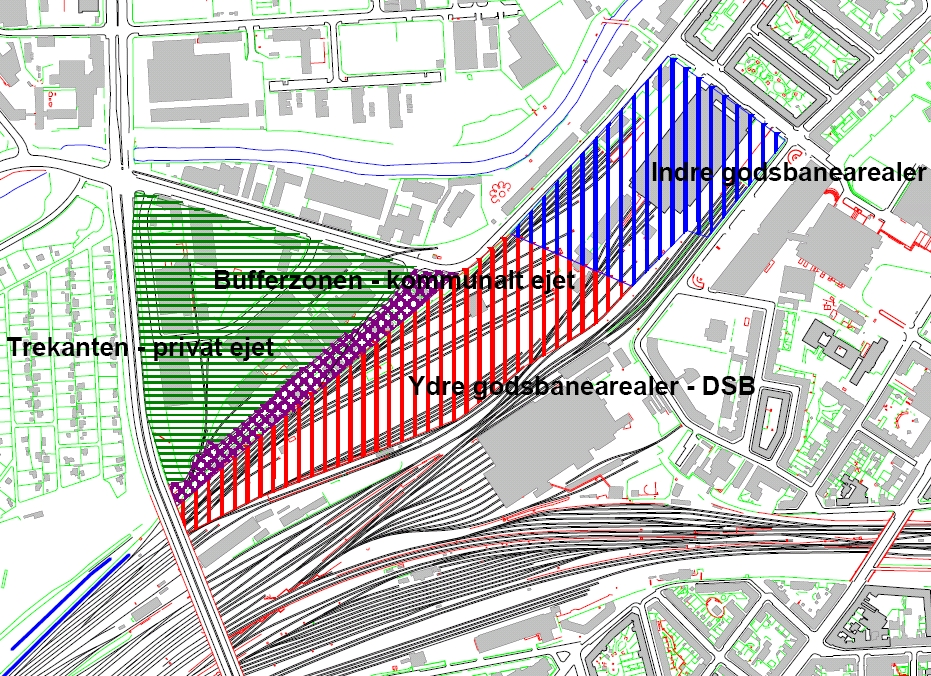
iAt the start of the new millennium, Aarhus City Council had a plan to develop a cultural quarter in the area, with Huset and Kulturhus Aarhus as the spearheads, and Realdania providing the funding. The plan involved acquiring a large plot of land from DSB, but it never really came to fruition. Reportedly, this was because the council could not reach an agreement with DSB on the terms of the acquisition. One of the reasons was that DSB remained obliged to make the marshalling yard available to other potential freight operators.
The cultural plan faded somewhat into the background, and now the site came into play in connection with the much-desired multi-purpose hall, which every self-respecting town is planning these days.
Local politicians spoke highly of the cycle track at Atletion as the best possible location, whilst business leaders pointed specifically to the Goods Yard site as the most obvious choice for conferences, trade fairs, music and other activities which, alongside sport, are needed to help pay for the major investment.
On 15 May 2007, two reports were published by COWI and Rambøll. These reports led the councillor responsible to change his position and recommend a location at the Godsbane site.
A location on this site close to the city centre will create significant synergy with the other cultural and commercial facilities in the area, whilst the city’s other amenities are within walking distance.
The multi-purpose hall must be designed flexibly, with removable stands so that the floor space can be utilised.
Unlike the NRGi Arena, which is notorious for its poor access for equipment, the hall must be situated at street level and the floor must be able to withstand equipment being driven directly into the venue.
There is talk of a capacity of up to 20,000 seated spectators, or roughly the same as Madison Square Garden in New York.
At the same time, Århus Elite has been working on a plan for the area around Atletion, where the cycle track will be used for other, less extensive but more revenue-generating purposes, such as a sports college.
There are still many outstanding issues before construction of a hall costing 1.2 billion kroner can begin.
For example, private investors must be found to cover the entire construction cost and the majority of the running costs.
 i
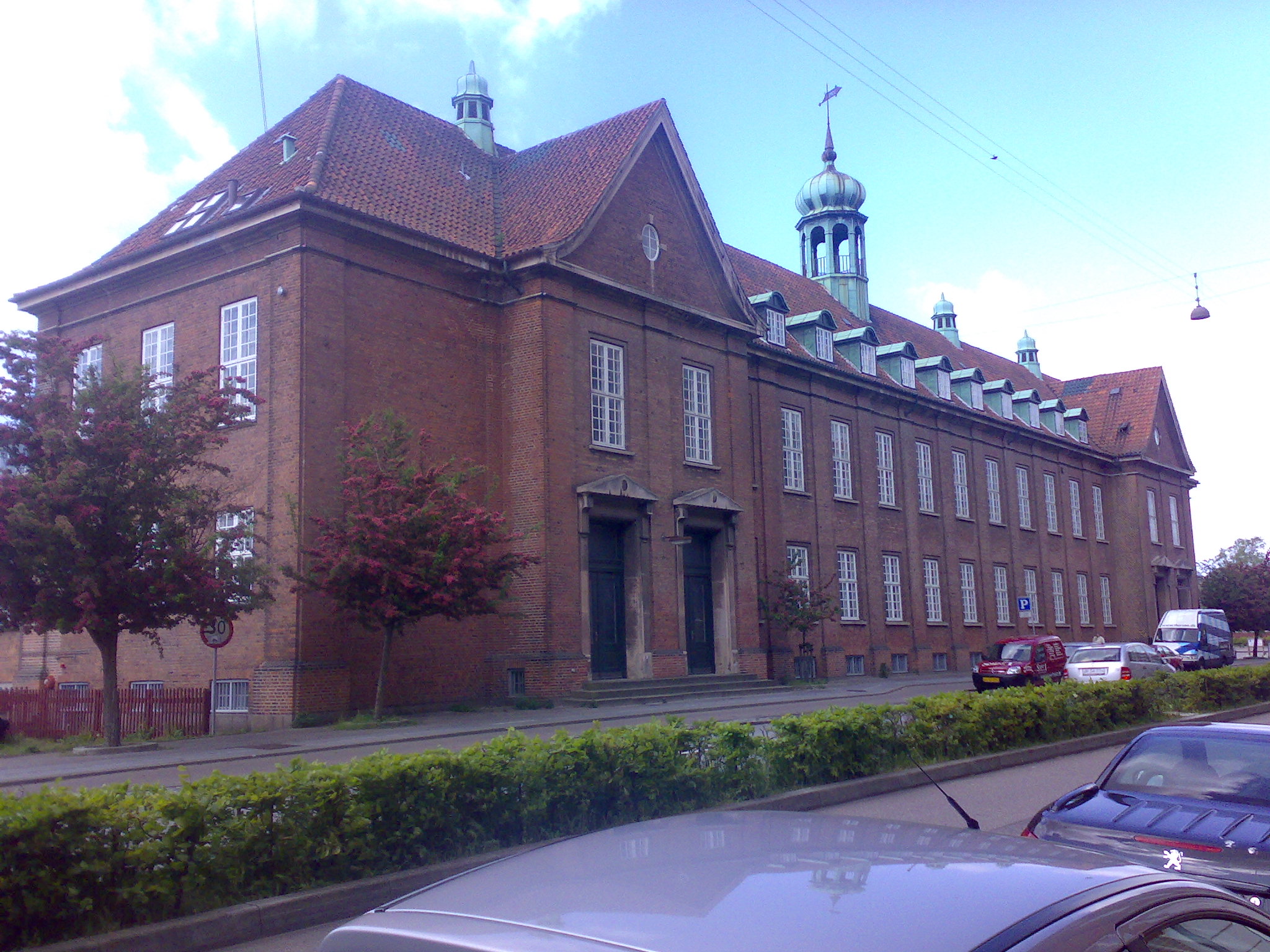
iThe construction of a multi-purpose hall on the site makes excellent use of the old industrial area. We have yet to see any drawings of the proposed hall, but one must hope that the architecture takes the site’s history into account.
One possibility is to incorporate part of the old administration building from 1921, in the same way as has been done at Clemensborg and Voxhall. The main building is listed in the municipal atlas as worthy of preservation at Level 2, i.e. at the same level as the buildings surrounding the other railway station square.
The infrastructure in the area will also require a review.
Even today, traffic comes to a standstill when there are performances at the Musikhuset, and although there are enough parking spaces beneath the Scandinavian Congress Centre, the car park functions poorly when large numbers of people are entering and leaving at the same time.
In November 2007, a report was published by COWI containing traffic assessments of siting the multi-purpose hall at either Godsbanen or in the Stadion area. Although both locations would present a number of challenges, several factors in the report favour a location at Godsbanen. It is expected that Aarhus City Council will make a final decision on the location of a multi-purpose arena at Godsbanen in 2007.