The Riding Hall – The Cultural Centre of the Future
 i
iOn 27 February, the exhibition “Ridehuset – The Cultural Centre of the Future” opened at ARoS. The exhibition consists of a series of display panels and models illustrating the redevelopment of Ridehuset. The refurbishment has been conceived by Kulturhus Århus, of which the Ridehuset forms part, together with an architectural firm called Futastic Structures (a name that appealed to Councillor Flemming Knudsen).
The aim of the redevelopment is to provide public facilities such as a foyer, cloakroom, toilets and so on, as well as backstage areas for storage and artists’ dressing rooms.
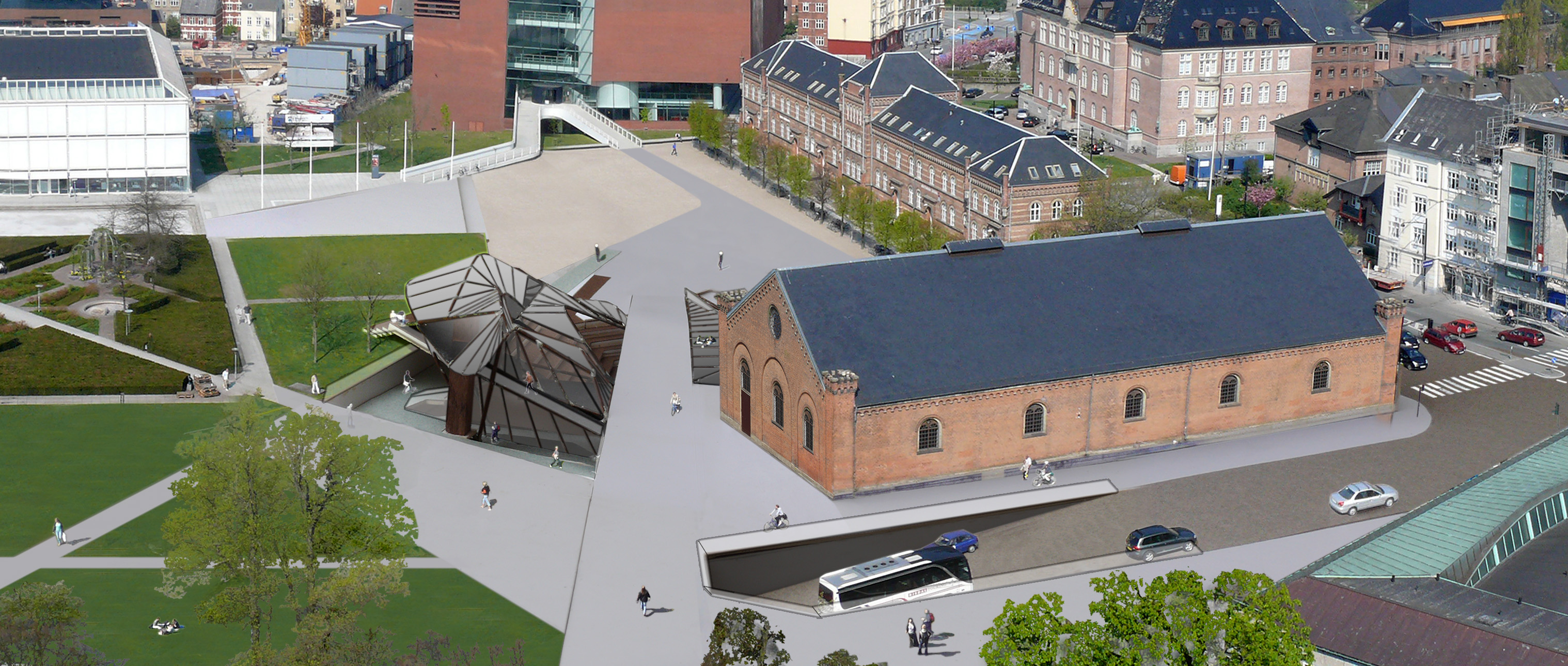
These spaces will be created by excavating a basement beneath Ridehuset and Officerspladsen, so that no further construction takes place on the site, apart from a new entrance to the underground foyer.
The Riding Hall is a building that dates back to the area’s history as a barracks site, as do the Officers’ Building and Officers’ Square, and are, moreover, the city’s major cultural bastions: ARoS, the Musikhuset and the Scandinavian Congress Centre, built on the site of the former barracks.
For many years now, the Ridehuset has been let out as a ‘covered floor’, allowing individual events to arrange the rustic hall as required. This has resulted in some set-ups imbued with a sense of history, but the ad hoc layout has been costly, and the events have suffered from poor facilities for the public, limited accessibility for disabled people and a non-existent backstage area.
 i
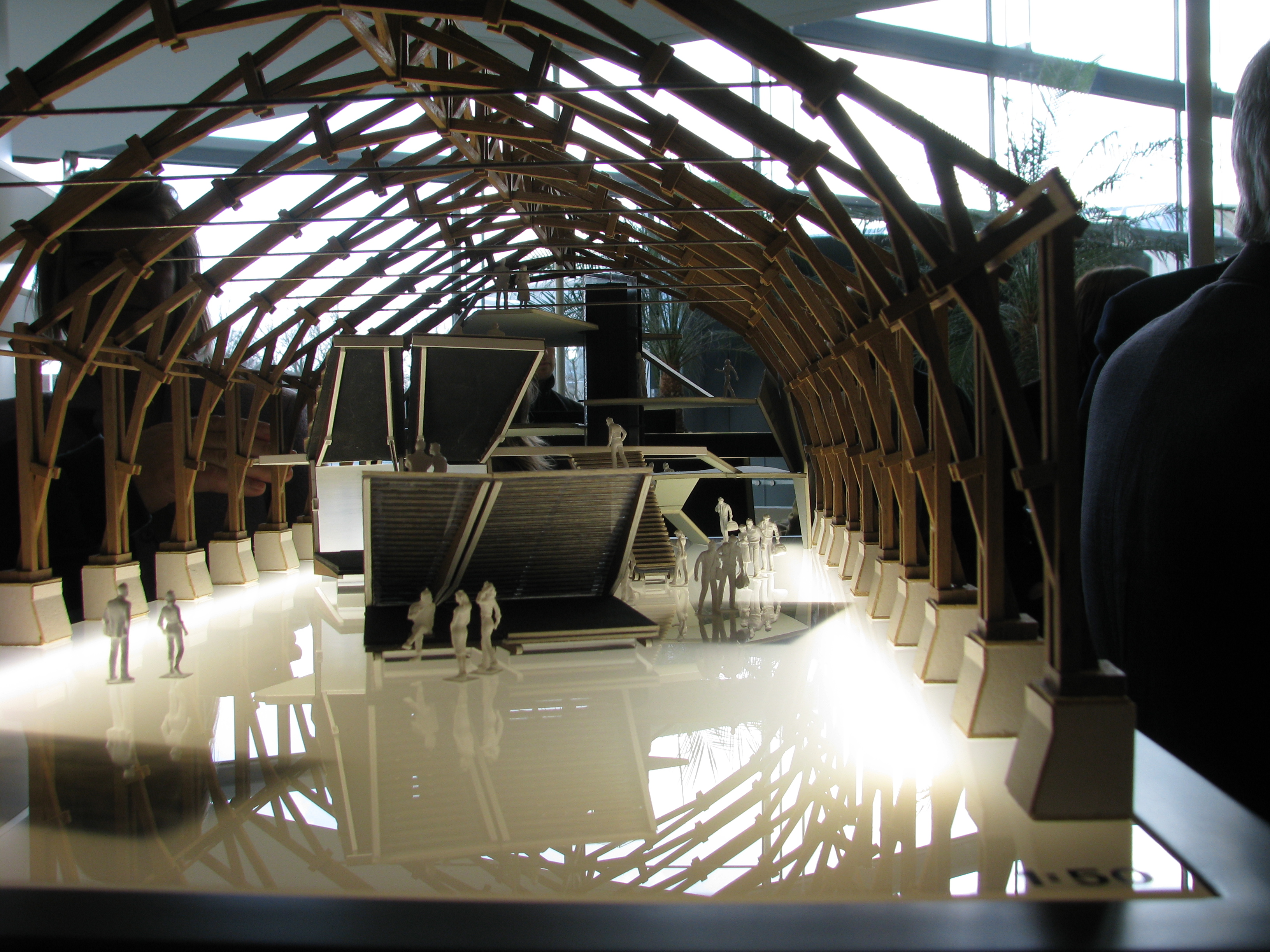
iThese facilities will therefore be established below ground level, and lifts for the public and equipment will be installed between the basement and the existing floor; furthermore, part of the floor will be made ‘adjustable’ so that the height can be adapted to requirements. At the southern end, a so-called ‘Ridehus base’ will be established, featuring horizontal surfaces that can serve as a starting point for individual stage set-ups.
As a basis for the interior design, a series of ‘Ridehus’ modules will be created, which can be used for stage set-ups, grandstands and dividing the building into smaller spaces.
On Officerspladsen, a superstructure will be built over the underground facilities which, like the Louvre’s glass pyramid, will serve as a new entrance and a self-contained event area.
Finally, the plan sets out a vision to link the Musikhus and Rådhusparken by routing Frederiks Alle through a tunnel approximately between Brobergskolen and Vester Alle.
The plan should be viewed in the context of Aarhus’s ambition to become European Capital of Culture in 2017. This ambition has recently led to the appointment of the experienced cultural director Trevor Davies, who has a background in both the Aarhus Festival and the organisation behind the 1996 European Capital of Culture in Copenhagen. As Cultural Capital Secretary, Trevor Davies is tasked with ensuring that the city’s cultural life develops in the run-up to the submission of the application in 2011.
Should Aarhus be awarded the honour, the area comprising the Ridehuset, ARoS, Musikhuset, SCC, as well as the forthcoming cultural centre at Godsbanen and Multihallen, will be central to the project.
 i
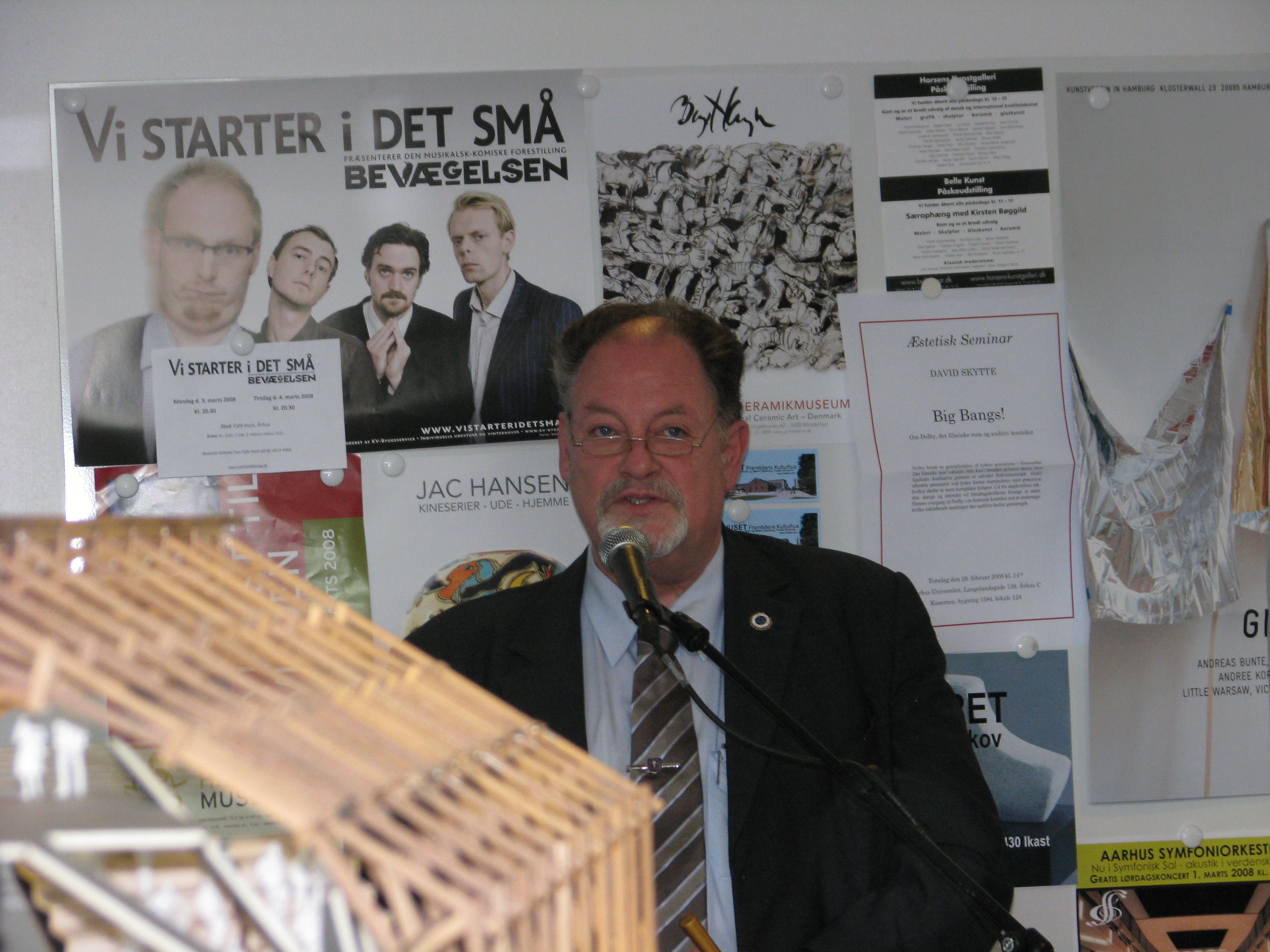
iPerhaps for this very reason, the director of ARoS was met with a Jutlandic “jow jow” from the councillor for culture when he presented the proposal, accompanied by the remark “we’ll have to see if anything comes of it”.
In his speech, Flemming Knudsen stated that whilst this was merely a proposal, and that there could well be quite significant changes to the concept, but that it was beyond dispute that the Ridehuset IS Aarhus’s future cultural centre, and that the problems currently affecting the building must be resolved.
The plan’s underground elements seem obvious because they create the necessary space without disrupting the historic layout of the site. As with the entrance to the Louvre, the entrance to the new cultural centre will undoubtedly be a matter of debate. I shall leave it to others to judge whether or not it fits in with its surroundings. Personally, I would prefer an entrance area that evoked the area’s military history a little more.
The idea of burying Frederiks Alle has been circulating for some time, but has never before (to my knowledge) formed part of a semi-municipal proposal.
The budget must be regarded as somewhat tight from the outset. The Marselis Tunnel is currently planned at an approximate cost of 1 million kroner per metre, corresponding to a cost of 250 million kroner for burying Frederiks Alle – or almost the same as the 17,000-square-metre extension of the Musikhuset.
Furthermore, the future use of Frederiks Alle is uncertain. The light rail plan from June 2000 assumes that Vester Alle and Rådhuspladsen will be closed to motor traffic, which means that Frederiks Alle’s function as the southern gateway to the city will cease. In the meantime, it is likely that significant progress can be made by redesigning the road, for example by replacing the wide, traffic-attracting tarmac with cobblestones, which would encourage traffic to use Ringgaden/Silkeborgvej or Værkmestergade to a greater extent.
The plan will now be left to simmer, and the redevelopment will probably, in one form or another, be included in the next cultural agreement, due to be adopted in four years’ time, so that the modernisation of Aarhus’s cultural centre can take place before Aarhus, hopefully, becomes one of the hosts of the European Capital of Culture 2017.