Myth, Memory and Machines
How technical history survives as myth—and why narrative can execute network functions.
Norse myth survives in Project SolPorten as compressed technical history. Names such as Bifröst, Yggdrasil and the nine realms preserve relationships among places, cultures and infrastructure, but poetry changes those relationships into story. The result is neither a literal engineering manual nor a meaningless fantasy.
 i
iMemory as compression
After Midgard’s route was buried, procedures outlived the systems they described. Repetition preserved order; meter preserved timing; kennings preserved relationships that no longer had ordinary words. Signe Lau’s central discovery is that variation matters: some surviving poems contain alternative command branches rather than corrupt copies.
Narrative as execution
Malik Rahbek shows that the network responds not to Old Norse as a privileged language but to structured sequences carried by it. Story can therefore become executable instruction when rhythm, order, stellar position and a physical controller align.
Limits
The real Sun Chariot and Norse literary sources do not demonstrate an interstellar network. SolPorten uses genuine objects and mythic vocabulary as the boundary between public fact and explicit fiction.
From memory to command
- Hidden sequence
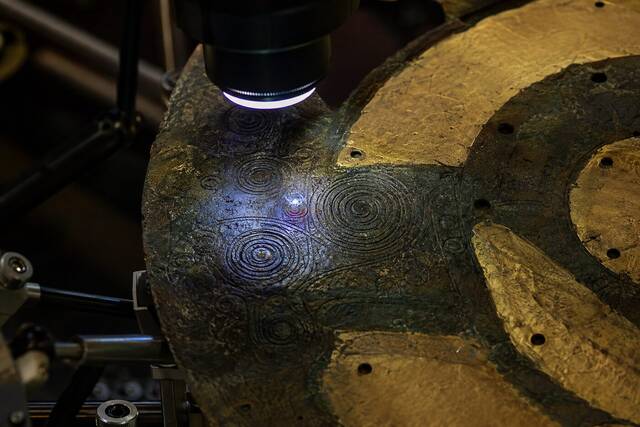
Freja finds structure beneath Solvognen’s visible decoration.
- Technical syntax
Signe identifies executable order inside poetic variation.
- Bifröst command
The team uses narrative structure to alter the router’s state.